

Southern Japan Cruise with Holland America
Round Trip from Tokyo
14 Days | February 27 - March 12, 2028
Starting At $CUSTOM
Encounter dynamic cities and natural wonders on a roundtrip cruise from Tokyo. Explore Japan and South Korea on this enticing voyage, featuring scenic cruising through the Kanmon Strait, an overnight in Osaka, and picturesque gems such as Kochi and Nagoya.
Highlights
Price Includes:
|
Ports of Call:
|
Speak to your U S Tours Sales Representative about a pre cruise stay in Tokyo! We can customize to fit your needs & wants!
Itinerary
Day 1: Tokyo, Japan
Tokyo is the largest city on earth and packed with some of the world’s best shops, museums and restaurants, big and small. While the bright neon lights and the bustle of contemporary Tokyo may be what comes to mind when you think of the city, there is another side.
Day 2: Shimizu, Japan
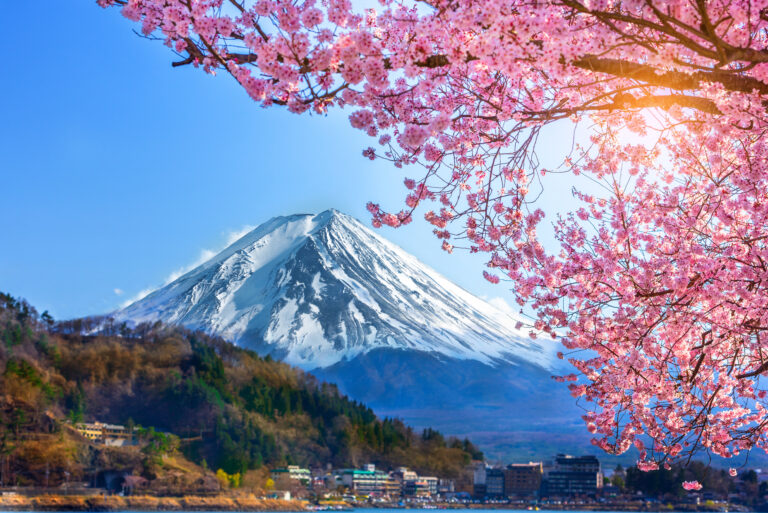
Widely regarded as one of Japan’s most beautiful ports, Shimizu affords peerless views of Mount Fuji on a clear day and claims the scenic Miho-no-Matsubara pine forest as a backdrop (both are UNESCO World Heritage sites). The port’s temperate climate and rich culture—heavily connected to the surrounding Shizuoka region—have made it one of the country’s prime sightseeing destinations. A few of the main attractions include Kunozan Toshogu Shrine, designated a National Treasure by the Japanese government, Sumpu Castle (built in 1586) and Shizuoka Sengen Shrine, where warlord Tokugawa Ieyasu, who ushered in the Edo period, held his coming-of-age ceremony. Tokugawa shoguns ruled Japan for 250 years, until 1867. The broader region offers plenty in the way of picturesque coastal landscapes, tea plantations and a wealth of Buddhist temples and Shinto shrines, while the port itself—famed in the 1900s for its tea exports—is today best known for its prodigious tuna haul, the biggest in Japan, samples of which can be enjoyed in many of the port’s fantastic restaurants along with other local delicacies such as sakura shrimp and shirasu (whitebait).
Day 3: Osaka, Japan
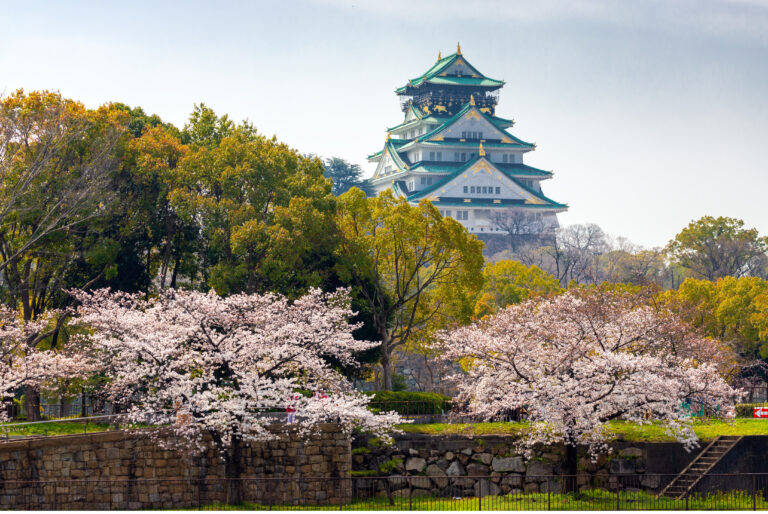
Think of Osaka, Japan (accent on the O), as a combination of Los Angeles and Chicago. It very definitely has L.A.’s second-city complex, but its attitude is pure Chicago. The only business that matters is business, and so what if the Hanshin Tigers, the local baseball team, are frequently the worst professional athletes in the world? They’re the home team. People in Osaka laugh louder, play harder and drink more than Tokyo’s most decadent dreams. Osaka even has its own dialect, one the rest of the country calls “dirty Japanese,” one entirely different than even Kobe’s—and Kobe is an Osaka suburb.
Day 4: Osaka, Japan
Nothing is old in Osaka. The place was flattened during the war (and then again in 1962 and 1989, by Godzilla). During the reconstruction, they forgot to include much in the way of parks or green space, and the sheer amount of concrete and steel sights can get overwhelming.
But Osaka has its attractions and interesting things to do. Sumo wrestlers wait for trains, reeking of chanko-nabe (traditional sumo food; pure energy and calories), just daring the official railway pushers to push them. Yakuza (Japanese gangsters) get train cars to themselves, but if you get on with them, it’s like you’re invisible. Busy markets, the visual noise of neon and nonstop action on shopping streets offer insight into the energy and ambition of Osaka.
And if all that isn’t enough, Osaka is less than an hour from some of the most beautiful temples, shrines and ancient Japanese tourist attractions in the world—a thousand years of Japanese history—waiting in the old capitals of Kyoto and Nara.
Day 5: Day at Sea
Today is a full day at sea.
Day 6: Kagoshima, Japan
Situated at the southern tip of Japan, Kagoshima is the capital of the prefecture of the same name and famous for its dramatic views of Sakurajima, an active volcano that smolders across the bay. One of the most popular activities is taking a ferry to Sakurajima and hiking on the 100-year-old lava flow that is now a grassy peninsula. Kagoshima, however, offers much more than the volcano’s almost overwhelming beauty. The food scene provides opportunities to experience the area’s rich culinary culture and features dishes using locally caught fish and regional specialties, like satsuma a’ge (deep-fried fish cake) and shōchū, a traditional beverage made at more than 100 distilleries in Kagoshima alone. Although the city was officially founded in 1889, it has an even longer history that is reflected in the 17th-century gardens of Sengan-en. More recent events are covered at a museum dedicated to the kamikaze pilots who flew out of Kagoshima. Other popular attractions include the City Aquarium, the Museum of the Meiji Restoration with its exhibits exploring local history and the City Museum of Art with its collection that covers both local contemporary and older art. With so much to do, visitors may want to consider the Cute transit card. Available at tourist information offices, one-day Cute cards cover city buses, trams and Sakurajima ferries and also provide discounted admission to several attractions.
Day 7: Nagasaki, Japan
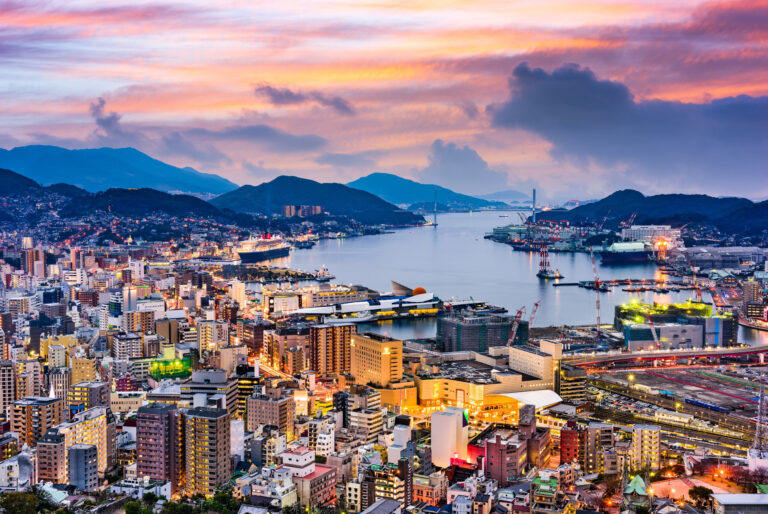
Situated in the northwest of Kyushu, the third-largest island in Japan, Nagasaki is one of the country’s most cosmopolitan port cities, with a decent tourism infrastructure, a fascinating past that stretches back to the early 7th century and a picturesque harbor that’s been an active port since the 16th century. Home to around 500,000 residents, the city is a buzzy yet relaxed place with abundant services, shops and restaurants as well as several cultural and historic attractions that are easily explored on foot and via public transportation. Check out the Nagasaki Peace Park and Atomic Bomb Museum, which outline the horrific bombing of the city during World War II while making a poignant pledge for world peace. Foodies will enjoy the wide variety of tastes to be found in Chinatown and the Shianbashi Gourmet Street. If you are visiting with children, the Huis Ten Bosch theme park—modeled on a medieval Dutch town—makes for a fun diversion. Look out, too, for popular annual events like October’s Kunchi Festival and the wintertime Nagasaki Lantern Festival.
Day 8: Busan (Pusan), South Korea
South Korea’s second-largest city (after the capital, Seoul), Busan is located in the southeastern corner of the country along the Sea of Japan. It combines a vibrant, big-city atmosphere with a famously laid-back attitude and subtropical landscapes. Often described as the “San Francisco of Korea,” thanks mainly to its hilly terrain and close-knit neighborhoods, it offers visitors a little of everything: fashionable boutiques, dynamic culture and buzzy nightlife, as well as sandy beaches, hot springs and nearby mountains crossed with hiking trails and dotted with temples. Cultural highlights include the Gamcheon Cultural Village; the spectacular Haedong Yonggungsa Temple, built into the side of a cliff; and Art Street in Sinchang-dong, which hosts art competitions, exhibitions and cultural events such as the annual Busan International Film Festival. Those who enjoy hiking can explore the famed cliffs of Taejongdae Park, while the white sand beaches at Gwangalli and Haeundae are ideal places to relax by the seashore. Foodies will love Busan, too, not just for its excellent restaurants but also for the many atmospheric markets: the low-key Millak Hoe Town Market, tourist spots like Jagalchi Fish Market and the market at Haeundae with its ramshackle stalls selling gukpab (a traditional rice soup).
Day 9: Fukuoka, Japan
Fukuoka, Kyushu’s largest city, was once two separate entities: Fukuoka in the west and the merchant area of Hakata to the east. Joined together in 1889, the contemporary city—population 1.5 million—has a lively, modern atmosphere, an array of impressive architecture by international starchitects, including Rem Koolhaas, César Pelli, Emilio Ambasz and Aldo Rossi, and a number of cultural attractions and museums such as the Fukuoka Asian Art Museum. Modern developments like Canal City—a mixed-use complex designed by American Jon Jerde that contains hotels, cinemas, restaurants and shops—lend the city space a futuristic air, as does the striking 234-meter (768-foot) Fukuoka Tower, which is covered in mirrored glass and has an observation deck. On the historical side, sites like the Kushida Shrine and the ruins of Fukuoka Castle offer traditional and cultural insights. The pond in the center of Ōhori, Fukuoka’s largest park, was once part of Fukuoka Castle’s moat, and you’ll find gardens, a zoo, an amusement park and a car museum in Uminonakamichi Seaside Park.
Day 10: Kanmon Strait Scenic Cruising
The Kanmon Strait is a narrow channel of water that separates two of Japan’s main islands, Honshu and Kyushu. The channel has long been important to maritime transportation and cargo ships, as it connects the Sea of Japan and the Inland Sea. Passenger and car ferries link the port cities of Shimonoseki and Kitakyushu, as do trains and bridges. The battle between the U.S. and Japanese navies that presaged the Shimonoseki Campaign in 1863 took place here, and eventually led to Japan’s opening up to Western powers. The cannons used during the campaign can today be seen near Shimonoseki’s port, where you can also dine at gourmet restaurants serving local delicacies such as fugu (blowfish), shop at venues like the Sea Mall, and connect with ferry service to Busan, in South Korea, and the island of Kyushu.The port at Kitakyushu (Moji Port) is equally historic and attractive, serving as a gateway to Honshu and Kyushu for centuries as well as an important international trade hub since the late 19th century. Although more industrial than Shimonoseki, it has many Western-style buildings, including the neo-Renaissance Mojiko Station, constructed in 1914, as well as other tourist attractions such as a developed promenade and the Kawachi Fuji Gardens. A highlight of the Kanmon Strait is an annual fireworks display—the largest in Japan—with more than 13,000 rockets fired from both sides of the strait. The spectacle draws more than a million visitors every August.
Day 11: Hiroshima, Japan
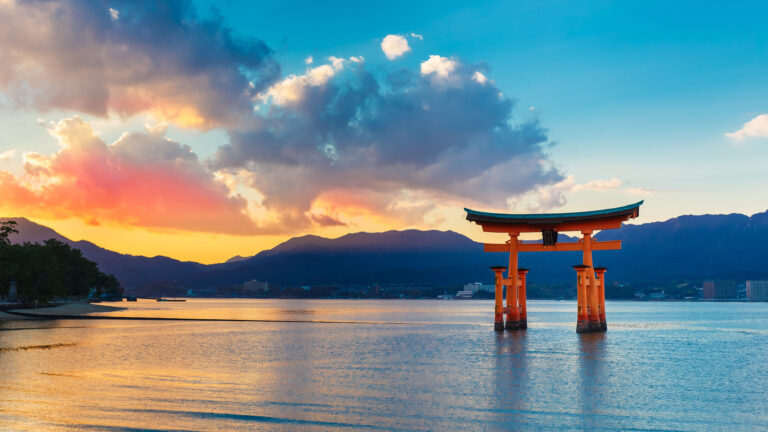
Located in the southwest of Japan, Hiroshima, the main city of the Chugoku region, is set within a striking natural landscape of mountains, sea and rivers. Home to more than one million inhabitants, it’s famous as the site of the explosion of the world’s first atomic bomb, dropped by the U.S. in August 1945. This cataclysm is sensitively documented at the Hiroshima Peace Memorial Park and associated Hiroshima Peace Memorial Museum. The city offers visitors a great deal more than the tragedy of the recent past. In addition to the memorials to the events of World War II, there are an array of shrines and temples, as well as the city’s reconstructed castle, which was originally founded in the 16th century.Nature lovers will be charmed by the historic Shukkei-en Garden, commissioned in 1620, and Miyajima island, one of the most scenic spots in Japan. The city is home to a number of art institutions, including the Hiroshima Museum of Art, which houses a collection of Impressionist and Japanese oil paintings, the Hiroshima City Museum of Contemporary Art and the quirky Mazda Museum. There is also an array of excellent restaurants and bars—the city is known for its okonomiyaki, a type of savory pancake—as well as a popular oyster festival each year.
Day 12: Kochi, Japan
High atop a hill in Kochi sits 17th-century Kochi Castle, once the seat of the Yamauchi lords. Explore this historic site and enjoy panoramic views of the city, then dine on sushi at Hirome Market.
Day 13: Day at Sea
Today is a full day at sea.
Day 14: Nagoya, Japan
High atop a hill in Kochi sits 17th-century Kochi Castle, once the seat of the Yamauchi lords. Explore this historic site and enjoy panoramic views of the city, then dine on sushi at Hirome Market.
Day 15: Tokyo, Japan
Today arrive back into Tokyo and depart for home.